
Timber vs Conventional Construction: Which Is Right for You?
Overview
When planning a custom home, barndominium, or commercial building, one of the biggest decisions is the construction method. Timber frame and conventional construction both have their place, but they offer very different benefits in terms of design, performance and long-term value.
In this guide, we’ll break down the key differences to help you choose the best option for your goals, lifestyle and budget.
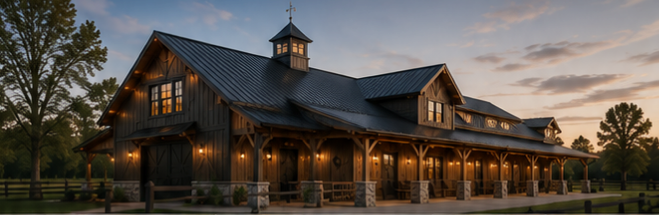
Key Differences
Timber frame and conventional construction differ in the materials used, building techniques and overall design approach.
| Feature | Timber Frame Construction | Conventional Construction |
|---|---|---|
| Primary Structure | Large wood beams and posts | Stud framing (2×4 or 2×6 lumber) |
| Design Flexibility | Open spaces, exposed beams | More walls and load-bearing constraints |
| Build Time | Often faster on site with pre-cut frames | Typically longer on site |
| Aesthetics | Natural wood, timeless appeal | Traditional finishes (drywall, trim) |
| Long-Term Value | High durability, low maintenance | Good value, can require more maintenance |
Cost Comparison
The cost of a timber frame building can be higher upfront due to the specialized materials and precision engineering involved. Conventional construction often has a lower initial cost, since it uses standardized materials and widely available labor. However, many clients find that the long-term value, energy efficiency and durability of timber frame make it a worthwhile investment.
While conventional builds may have a lower initial cost, timber frame structures often provide better long-term value through lower maintenance and greater longevity.
Every project is different. The size of the building, the finishes you choose and your site all affect the final cost of either method, so the best way to compare is with a detailed estimate for your specific plans.
Design & Aesthetics
Timber frame buildings are known for their stunning exposed beams, open spaces and natural wood finishes. They create a warm, inviting atmosphere that works beautifully for homes, barndominiums, event spaces and commercial buildings.
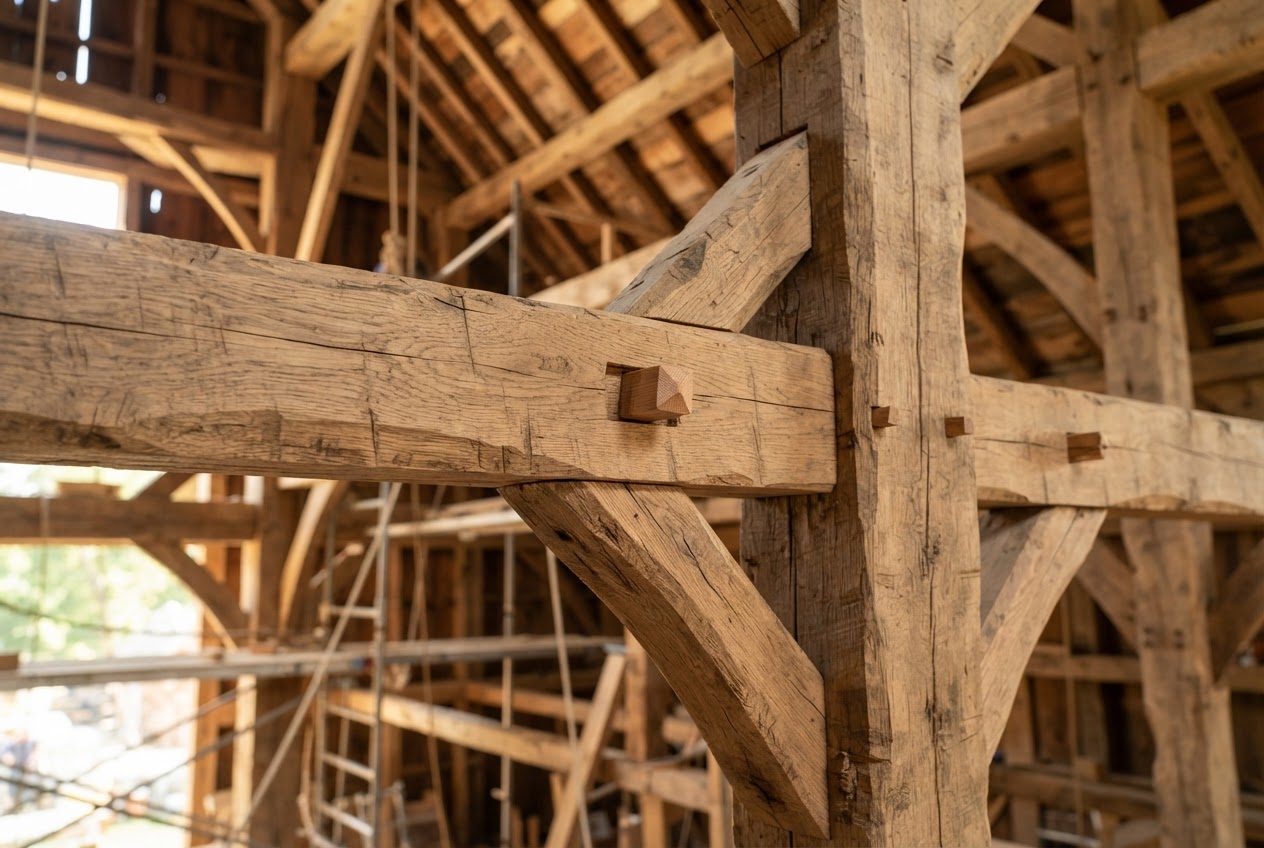
Because the frame carries the load, interior walls can go almost anywhere, which makes vaulted great rooms and open floor plans easier to achieve. Conventional construction hides the structure behind drywall, which suits a more traditional look but usually needs more interior load-bearing walls.
Durability & Lifespan
Large timbers joined with traditional joinery create a robust structure that, with proper care, can last for generations. Many timber frame barns and homes built centuries ago are still standing today.
Conventional framing is also durable when it’s well built and maintained. The main difference is that a timber frame’s structure stays visible, so it’s easy to inspect and care for over the life of the building.
Energy Efficiency
A building’s energy performance depends mostly on how well it’s enclosed. Timber frames are commonly wrapped with EPS or SIP panels, which create a continuous layer of insulation around the frame with fewer gaps and thermal bridges than insulation fitted between wall studs.
Conventional buildings can also perform well with upgraded insulation and careful air sealing. Either way, it’s worth discussing insulation and enclosure options early in the design process.
Which Is Right for You?
Neither approach is universally better — the right choice depends on your goals, budget and the look you want.
Timber frame may be right for you if you want:
- Open floor plans, vaulted ceilings and exposed beams
- A warm, natural look with timeless character
- A building made to last for generations
Conventional construction may be right for you if you want:
- The lowest possible upfront cost
- A traditional interior with drywall finishes
- A more standard floor plan
Talking through your goals with a builder experienced in both methods is the best way to decide which fits your project. Our team is happy to walk you through the options and help you make the right decision for your build.